


Socrates: The Father of Western Philosophy
Socrates (c. 470 BCE – 399 BCE) was one of the greatest philosophers in human history and is widely regarded as the father of Western philosophy. Born in Athens, Greece, he devoted his life to the pursuit of wisdom, truth, and ethical living. Unlike many philosophers of his time, Socrates never wrote books or recorded his teachings. His ideas have survived through the works of his students, particularly Plato and Xenophon, making his influence timeless.
Early Life
Socrates was born around 470 BCE in Athens. His father, Sophroniscus, was a stonemason, while his mother, Phaenarete, worked as a midwife. During his early years, Socrates is believed to have worked alongside his father and later served as a soldier in the Athenian army. His courage in battle and dedication to civic duty earned him respect among his fellow citizens.
Philosophical Journey
Rather than teaching in formal schools, Socrates spent his days in public places such as marketplaces and gathering spots, engaging people in thoughtful conversations. He believed that true wisdom begins with recognizing one’s own ignorance. Instead of giving direct answers, he challenged people with carefully crafted questions that encouraged them to think critically and examine their beliefs.
This questioning technique, now known as the Socratic Method, remains one of the most influential educational approaches in the world. It is still widely used in philosophy, law, education, and leadership training to develop logical reasoning and analytical thinking.
Core Beliefs
Socrates believed that knowledge and virtue are inseparable. According to him, people commit wrong actions because they lack true understanding rather than because they intentionally choose evil. He encouraged individuals to seek self-knowledge, live ethically, and continuously question their assumptions. His philosophy emphasized that personal growth comes through reflection, honesty, and the pursuit of truth.
Trial and Death
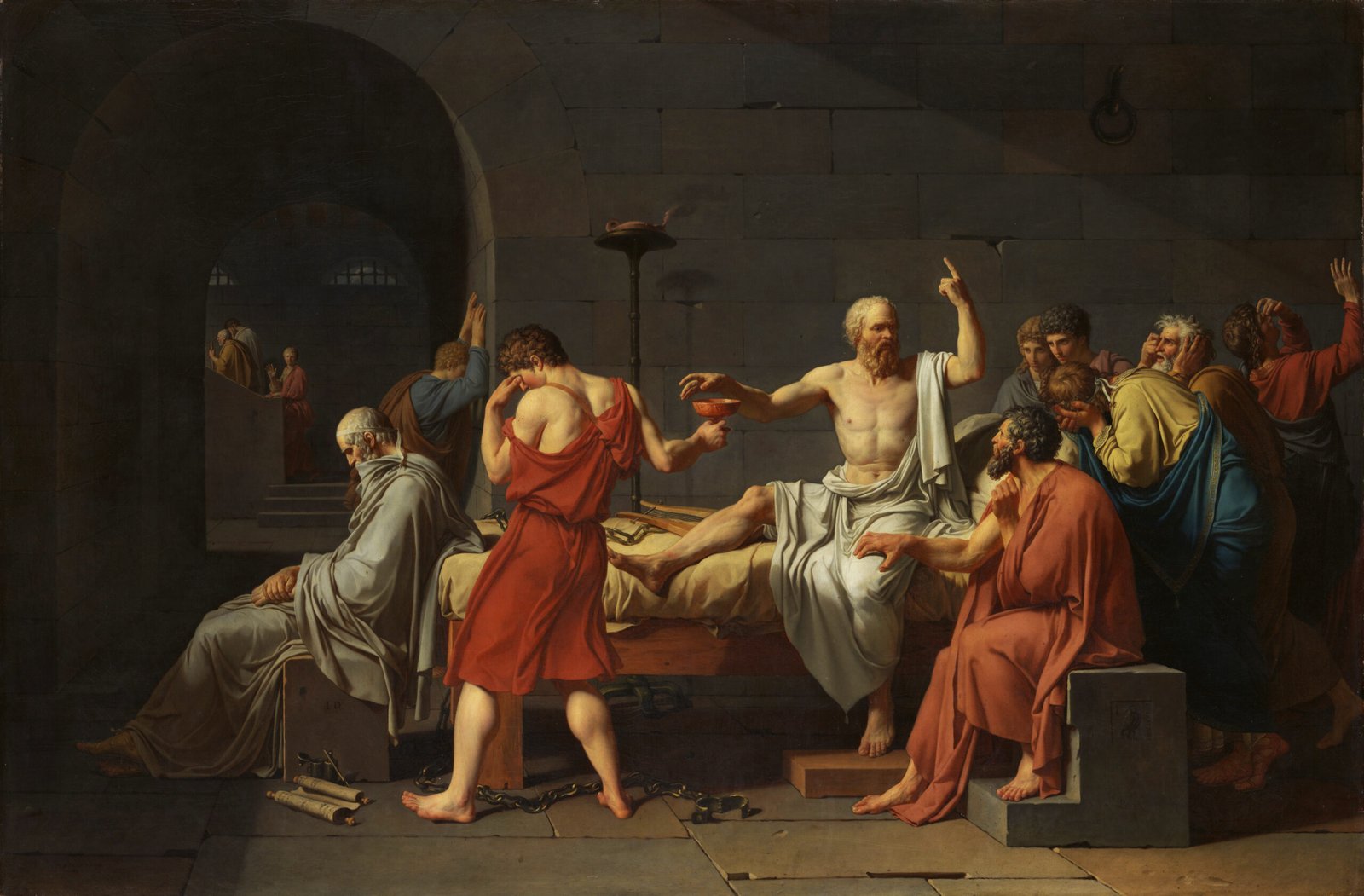
In 399 BCE, Socrates was brought to trial in Athens on charges of corrupting the youth and showing disrespect toward the city’s traditional gods. Although many of his followers urged him to escape, Socrates chose to respect the laws of Athens and accepted the court’s decision. He was sentenced to death and peacefully drank a cup of hemlock poison, demonstrating his unwavering commitment to his principles.
Legacy
Although Socrates left no written works, his teachings transformed the course of philosophy. His student Plato documented many of his conversations and later founded the Academy in Athens. Plato’s student Aristotle expanded these ideas further, laying the foundation for modern philosophy, science, ethics, and political thought.
Today, Socrates is remembered not only as a philosopher but also as a symbol of intellectual courage, critical thinking, and moral integrity. His teachings continue to inspire students, scholars, leaders, and thinkers across the world more than two thousand years after his death.
Interesting Facts
- Born around 470 BCE in Athens, Greece.
- Never wrote any books; his teachings survive through his students.
- Developed the famous Socratic Method of questioning.
- Believed that self-knowledge is the foundation of wisdom.
- Accepted his death sentence rather than abandoning his principles.
- Considered one of the founders of Western philosophy.
Famous Quotes
- “The unexamined life is not worth living.”
- “True wisdom comes to each of us when we realize how little we understand.”
- “Know thyself.”
- “Education is the kindling of a flame, not the filling of a vessel.” (Commonly attributed to Socrates.)
Conclusion
Socrates’ life demonstrates the power of questioning, reasoning, and ethical living. His commitment to truth and intellectual honesty laid the groundwork for Western philosophy and continues to influence education, law, leadership, and critical thinking today. His legacy reminds us that wisdom is achieved not by claiming to know everything, but by remaining curious and committed to lifelong learning.